Friday, July 5, 2013
Swill 7 Will Be Relased At Beastcrawl!
All right! Tomorrow night, the launch for Swill 7 takes place at Shashamane in Oakland. In the last few months, there have been three career events
that have been exerting a lot of influence on my life. One was
beginning my second novel for my e-publisher December House. The
second was the art show at Aunt Dofe's Hall of Recent Memory, where I
was able to find myself comfortable in a surprisingly elevated sphere.
(And where the Swillistrations were officially pronounced worthy...)
And tomorrow is the third, the introduction of both the new magazine
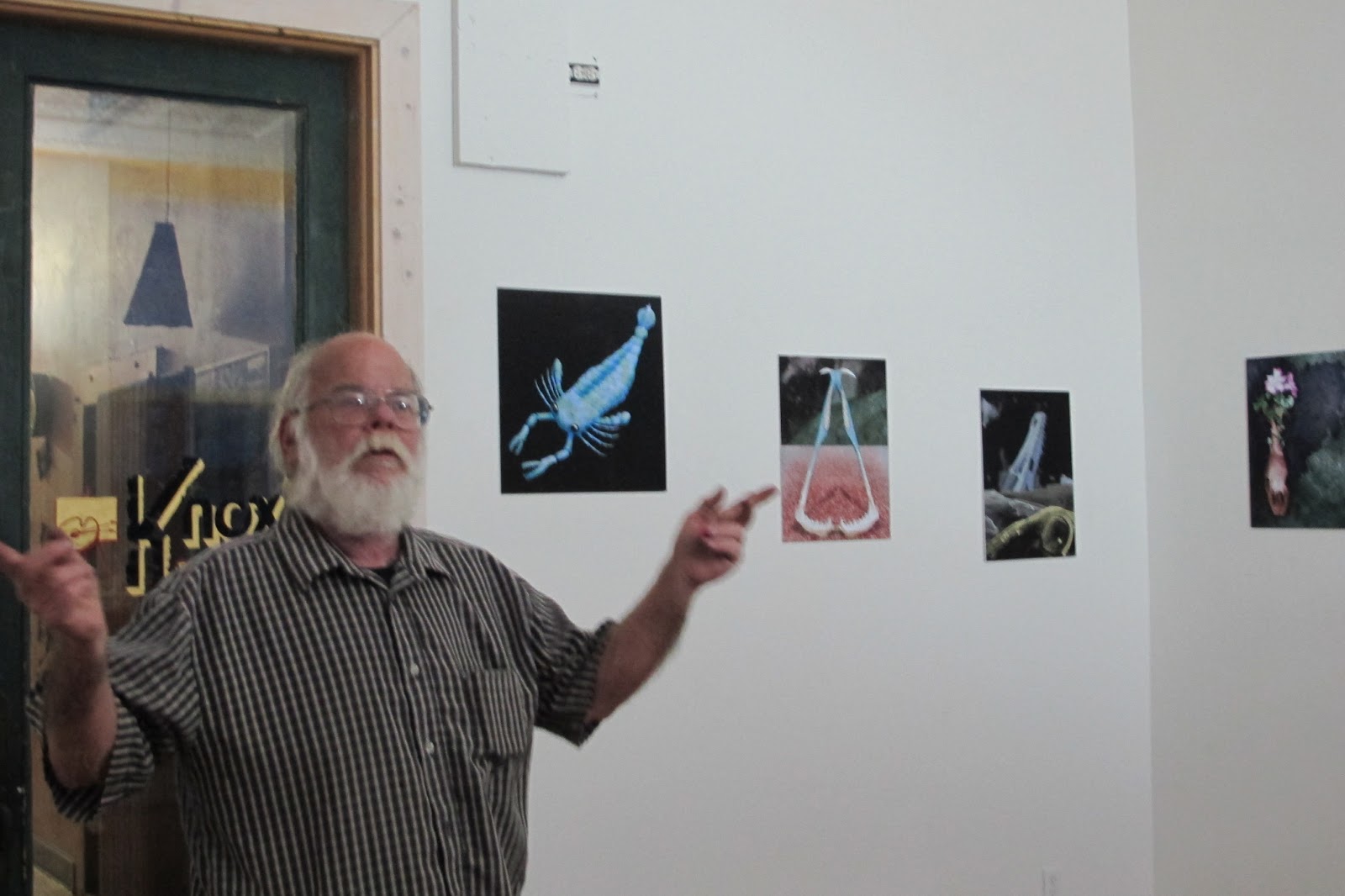
and the new series of... I guess at this point they're photos. See
samples above. Thirteen pages of interior images, folks, and all
bearing a fascinatingly oblique relationship to the associated
fiction, one that attempts to add an additional layer of resonance.
And to be able to introduce this at Beastcrawl! What a hoot.
See, that makes Swill part of the establishment. Which has been our
stated position from the beginning, but yeah. We're part of the
system.
Wheeeeeee!
So here's the issue.
The Lazarus Effect by Amy Yolanda Castillo features what I regard as
the premier circus animal attack of the issue, and then works to a
climax.
Til She Fill My Mouth With Laughing by Lisa Nohealani Morton is the
kind of submission I'd order out of a catalog if I had the option.
Smart, literate, it's got your footnotes and your Fabre quotes and all
the stuff that makes me smile. Plus, there's justifies nepotism, my
favorite kind. Of course, I bear an onus for abetting an oathbreaker,
but I'll take an onus for a good story any day.
Oblivion, by Holly Day, is a neat slice of fantastic naturalism with
real emotional tension. Think Serling, Matheson, even good King as
touchstones. And it's by the author of the For Dummies books on
Composition and Music Theory, which I probably will pick up at some
point.
Kevin Grows Up was a story written entirely out of spite, and as
always, I wound up living it in real life. Okay, I don't want to point
fingers and name names, because I'm a passive-aggressive shithead
sometimes. But let's say there was a magazine that published genre
fiction, okay? A very well-established magazine with a reputation for
literary standards above those typical for genre fiction. Published
Kurt Vonnegut, Shirley Jackson, Gore Vidal, a list of genuine
luminaries as long as your arm, as well as a lot of the best-written
fantastic fiction done inside of genre, with authors such as Ursula
leGuin, Jack Vance, and Avram Davidson being featured regularly during
the heights of their careers.
We're talking a fairly heavy cultural artifact.
When I read the current editor state that his target audience
consisted of twelve-year-old boys, I lost most of my interest in
publishing with them, but I suddenly needed to write a story that
would make a twelve-year-old boy feel horrible. And so I wrote Kevin
Grows Up.
But remember, I published it in Swill. So no twelve-year-old boy will
ever see it.
Shana Graham's Newark has elements of romance, noir, and surrealism,
and is pleasing in its resistance to being pinned-down. Too sharp for
a dream, too dizzy for reality. Reading this feels like being awake
for too long, and that's a compliment.
There were a number of Viet Nam veterens in my life when I was growing
up, and Gene Hines's Women In The River did not set off my bullshit
alarm, for whatever that's worth. Because of this, the story got a
little extra graphic something. Mr Hines, by the way, has published
with us before.
Stephan McQuiggan gives us a jolly old-fashioned bit of sadism in
Susannah Quietly. I could never resist poisoned candy...
Pancake Collection by Rob Pierce is 'typical' Pierce story in that it
combines alcohol, failed romance, physical violence, and a devestated
emotional affect ito damage the reader's equilibrium. He's pretty much
the best in town at this stuff.
And Tom Hoisington's Vigilant Resolve ends the issue with a
surprisingly sincere and positive note. "This son of a bitch means
it," I thought to myself on reading this one, and in it went.
This issue's a little heavy on conventional narrative, tending
strongly noirish. I think it's the best-looking issue so far, but I
would, wouldn't I?
So order it! Or come on down tomorrow night, and join me, Rob Pierce,Shawna Yang Ryan, and Warren Lutz for all the unwholesomeness thehuman mind can bear, plus drinks!
I'll see you there.
Thursday, July 4, 2013
Metropolitan Montana
Here's Dave Kirk in the gallery space at Aunt Dofe's Hall of Recent Memory. Everybody has to be nice to Dave from now on.
So they take me out to a back road in Montana, and I figured this was my chance to do some Western art. "Here I am, doing Western art," I thought to myself, and when I was done, I showed it to people and said, "See? I'm not afraid of Western art." I drew a cow, as well. I'll let you see it later.
When I got home and looked at my 'Western' art, I laughed out loud at what happens if you go far enough west...
Every day is backwards day. So of course, when I went to Montana for my show at Aunt Dofe's Hall of Recent Memory, I spent my time entirely in the company of people from the arts, academia, and broadcasting. The one civilian I listened to for any length of time turned out to write a column for a fishing magazine. And most of 'em were probably more conscientious lefties than I.
So go figure.
It was a ridiculously gratifying experience. I was treated as a precious object, I behaved as a humble servant, and the results were pleasing and harmonious. My pal Deborah (familiar to long-time readers) made sure I ate and walked every day, and arranged regular encounters with animals. I need a certain amount of physical affection, and without the missus and our dogs, horses, dogs, cats, cattle, and observed wild animals serve as palliative drugs. (Deborah's comment at the end of the trip -- "Animals compete for your attention, and people give you stuff. What's up with that?" -- was the last nail in the coffin of my former self-image. I am not an outcast, but rather one of those who glitters when he walks, and that boils up a whole fucking other kettle of worms. If I act like the sullen wretch I am, it comes across as arrogant or threatening rather than pathetic. I'm starting to feel that smiling and acting nice are responsibilities I've been shirking.)
But the whole scene wasn't about me, and I liked that. I was one of the main engines of the event, but an engine isn't an aeroplane. Dave Kirk, the curator of Aunt Dofe's, had gone through a fallow period, and this had been (or at least this is the impression people gave me) a source of hardship in the creative community. "Dave/Aunt Dofe's is the best thing to happen to Montana in a long time," was a statement I heard repeated from many mouths with the regularity of a chirping cricket. So a new season of shows at Aunt Dofe's was exciting news, a sort of cultural springtime.
Working on the sort of budget one gets for art produced outside the academic or commercial worlds, with access to any number of friends and colleagues who are known in the world of the arts, who have shows ready to go, who have pull and connections and collectors and so on, Dave, like an arrow straight to Hell, chose to go with an almost completely unknown artist, working in an eccentric, somewhat kitschy style, who would need complete sponsorship in order to participate.
On the night of the opening, I heard two phrases repeated over and over from a lot of different people. The fishing columnist (who I'm not ribbing) wasn't there, so it was all, you know. Arts types. Real arts types. Working, academics, broadcasting, like I said.
Some of them fixed me with an intense gaze, obviously meaning to drive some thought into my brain with the force of a wooden stake. "You do understand that this is one of the best gallery spaces in the world, and Dave is one of the best curators in the world, right? You do understand what that means?"
Well, I'm still in the process of understanding that one, but yeah, I kind of get it.
The other thing people said? "Thank you."
Like I said, still processing, kind of get it.
Here's the thing.
I'm proud of the show. There are two booklets there, A Bad Part of Town, and Swimming Crawling Walking Flying, that have been printed in editions of thirty, available only from Aunt Dofe's. There are fourteen images accompanied by thirteen poems. I did a walk-on reading early in the show, and would have done more except the band -- Fear Eats the Soul, and I wish I could find a good link for them -- caught fire, and to interfere would have been worse than a sin. It would have been a mistake.
But it was the way people swung through the event and picked up a charge that got me. That was my reward, that was my payoff. There was a buzz, there was energy, and there was a sense of harmony, of things operating in their proper sphere. People were enhanced by their interactions. And that was what I helped create with my art, and with my labor, and with my person. The essential scene, the music, food, drinks, and guests, could have happened without me.
But having me there gave the scene specificity and novelty. Hey, these are some of the coins art brings to the table. Happy to oblige. Thanks for having me.
I used to say that I was good at arrogance and shame, but pride and humility were incomprehensible to me. That's changed. Pride is knowing your strength, and humility is understanding that strength is responsibility rather than license, that strength is a gift others paid for.
There was no point in the artistic process where I felt doubt or worry. Nerves, yes. That's how I'm built. But the sense of complete confidence I felt throughout seemed the simple and proper result of understanding the range of my abilities rather than hubris. And those abilities seem not so much a part of me but rather a public trust -- I can do what I do because people invested in me. Time, money, and tradition have been granted me. It is appropriate that I do honor to the gifts I've been given.
Over the period of time, six months or so, not even a year, my life has undergone a series of changes, some startling, some the obvious outcome of the way I conduct myself in life. I have a publisher, and my next novel will be released in early 2014. This Saturday, I'll be reading and helping host a reading as part of this year's Beastcrawl. I am operating at a very eccentric intersection of fine art, popular culture, and science, and whatever it is that I am is still in the early stages of emergence. I'm nearly fifty; by the time I find out what I am, I'll have fifteen, twenty years worth of career if I score big. (I won't turn down more than that, but really, let's not be greedy.) Robertson Davies went downhill for his last two novels, but Hokusai went from hack to genius in his dotage. I seek to emulate Hokusai...
Man, I'm out of it. Thinking about my last-days work while doing this-days work. Processing, processing.
I'll talk more about the show later. But for now, know this. Deborah Kuchar and Dave Kirk got together and gave me one of the very best weeks I've experienced in my life. They went to expense and effort, and I hope very much that they got what they wanted.
Because I have been enhanced, and I hold them responsible.
Thursday, June 13, 2013
My First Solo Art Show
The above two images are the covers of two pamphlet-format
publications. They will be used at my upcoming show this month at Aunt Dofe's Hall of Recent Memory.
That's right, I'm going to be traveling to Montana, and if anyone can
guide me in the direction of some Zappa-themed novelty floss, I'd be
mighty grateful. And yes, A Bad Part of Town is going to have its spine
to the right, and will be read back to front, and the whole show is full
of that kind of crap because what the hell were you expecting from me?
Okay, folks. This may or may not be the last post for this site, but I've got a brief moment where I have the option of telling y'all what's going on.
I am, among other things, in the final stages of preparing for my first solo art show. This show will bring together my writing, my visual art, and my performance in one package, and if I can pull this off, you can expect more along those lines.
I had two conceptual issues to face in this project. The first is one that came to light in discussion with one of my oldest friends. (Those close to me have been startled by a recent burst of personal progress; it is the result of this friend going to great effort on my behalf, and I acknowledge this with much gratitude.) We were discussing the nature of art, and specifically the nature of printmaking. I'm a digital artist. Have been from the first time I held a Wacom stylus in my hand and I knew there was a way of communicating with a computer. I've been using Photoshop since it came on floppies, okay?
But now there really is no comparison between a woodblock or an etching and the object that rolls out of a printer. I argued against it at the time, but in retrospect, the idea grew in me that simply producing a print isn't enough.
I was also facing the idea that the museum, the gallery, and even the publication, for better or worse, outrank the art. They are there for the sake of the art, but they frame it, enclose it, and give the experience of art it its most essential physical qualities.
This realization depressed me, until I realized that it meant I had to take responsibility for the interaction between art and publication, or, in this case, between art and the gallery. What happens in the gallery space is the art, not the individual images on the walls. The images are offered for sale as much as memorabilia of an event as artworks in themselves. My job was not to produce images for display; my job was to take years worth of my art and writing and use them to convert the space into something unified and meaningful.
I could not engage directly with the gallery, although Dave Kirk, the owner, gave me some solid pointers on lighting. I did have the floorplan. At first, I used it simply as a means of referencing the measurements of the walls, but after poring over it blindly, I suddenly saw the essential shape of the space, the way it was divided, and the way people entering it as a gallery might move.
The four walls resolved themselves into two facing L-shapes, separated by doors. The short arms of the Ls receive west light, which is strong and varied, and seem to be the most visible from the street. So they get saturated colors, strong contrasts, skulls, monsters, and so on.
The pieces are in two parts. One is the image, and the other is a short poem functioning as a title. Most of the images are fifteen inches wide by twenty inches high; the poem/titles are on placards about nine inches by three inches. On the right side of the studio, the poems are aligned to the left of the placard, and the left edge of the placard is parallel to the left edge of the image. This unbalanced composition will lead the eye down and to the left, so that it will be natural to follow to the back door.
The pieces on the left will be leading the viewer to the right, again to the back door. With any luck, this should lead to a sort of swirl in the space, with a strong possibility that the viewer will travel in a figure-8 path.
In addition to the art on the walls, there were a number of pieces in this sequence that were best viewed as small black-and-white pieces. Rather than put them on the walls where they'd be overwhelmed by the large color pieces, I made two booklets combining writing and art in some odd ways. There will be two reading stations on site, one devoted to each booklet.
I'm really hoping that the combination of words, pictures, and interior design will push this a little further than the ordinary art show. And since I'm going to be performing at the opening, this will pretty much represent the maximum Sean the world has seen at any one time thus far.
You'll hear about it one way or another...
Friday, May 3, 2013
The Next Phase Has Begun
I can't tell you much about what happened over the last week. Let me put it this way.
Best. Sean. Story. So far. An amazingly fictional, mythological experience just choking with extremes and intensity. Ask me in person. It's mind-bending. James Herriot meets Rupert Pupkin.
But to cut to the chase.
I am as a phoenix risen from the flame. I am able. I am employed as an apprentice in a fascinating and lucrative profession, and I'm getting in through a side door. I have begun training to shape my body into a beautiful weapon. I have finally begun my course of instruction at Man School. I am being prepared to take a place in the one percent.
I know what I am now. There aren't any words for it these days, but there is a class of people like me. I have a fellowship, a guild, a history. Our core values are intellectualism, aesthetism, valor, honor, and excellence. I had the first two and the last, but without valor and honor I was part of a man. Now I am whole.
I have started taking steps toward real, actual adulthood. I will be engaging with the world on its own terms instead of dictating my own and grinning as the world flays me in response. My purity is over. I will have to contend with my core values as obstacles as well as virtues.
And I will need to access pleasures previously too -- sinful? degraded? -- for my previous self. Pride, vanity, competition, desire, all have to be embraced if I am going to be able to move in the circles into which I am being pulled. I'm going to be swimming with sharks, so this gator needs to smooth his moves and sharpen his teeth.
I'll be starting a new blog with a different title. Self-deprecation isn't appropriate for my current path. And I'll be going over this blog and reducing it to a 'best-of' collection, with all references to my personal frailties excised. I no longer approach life from the perspective of a victim, and wish to distance myself from that stance. No insult to anyone else; my attitude toward others is unchanged. But I've let fear govern my life to too great a degree for too long, and now things are different.
My life as an artist will continue unabated, and can only benefit from this new direction. Most of my independence has been left to me; what has been taken is the opportunity and desire for indolence.
Aspects of my character that have previously been unbending laws will now have to be guidelines and preferences. The fierce purity I have maintained through my life is no longer compatible with a course of honor.
And so.
Don't worry about me any more. I thrive. Don't think I'm going away. I will be more in touch than I was before. I'm thrashing with my new computer set-up, but I should be fully back on-line in short order. There will be a phone, and a mailing list, and business cards, and all the happy paraphernalia of a professional approach to life.
Now I'm going to go walk around and feel something strange thrum through my body as I absorb the fact that I don't hurt and I'm not doomed and tomorrow will see me stronger than today. See y'all around, and give my best to your family.
Best. Sean. Story. So far. An amazingly fictional, mythological experience just choking with extremes and intensity. Ask me in person. It's mind-bending. James Herriot meets Rupert Pupkin.
But to cut to the chase.
I am as a phoenix risen from the flame. I am able. I am employed as an apprentice in a fascinating and lucrative profession, and I'm getting in through a side door. I have begun training to shape my body into a beautiful weapon. I have finally begun my course of instruction at Man School. I am being prepared to take a place in the one percent.
I know what I am now. There aren't any words for it these days, but there is a class of people like me. I have a fellowship, a guild, a history. Our core values are intellectualism, aesthetism, valor, honor, and excellence. I had the first two and the last, but without valor and honor I was part of a man. Now I am whole.
I have started taking steps toward real, actual adulthood. I will be engaging with the world on its own terms instead of dictating my own and grinning as the world flays me in response. My purity is over. I will have to contend with my core values as obstacles as well as virtues.
And I will need to access pleasures previously too -- sinful? degraded? -- for my previous self. Pride, vanity, competition, desire, all have to be embraced if I am going to be able to move in the circles into which I am being pulled. I'm going to be swimming with sharks, so this gator needs to smooth his moves and sharpen his teeth.
I'll be starting a new blog with a different title. Self-deprecation isn't appropriate for my current path. And I'll be going over this blog and reducing it to a 'best-of' collection, with all references to my personal frailties excised. I no longer approach life from the perspective of a victim, and wish to distance myself from that stance. No insult to anyone else; my attitude toward others is unchanged. But I've let fear govern my life to too great a degree for too long, and now things are different.
My life as an artist will continue unabated, and can only benefit from this new direction. Most of my independence has been left to me; what has been taken is the opportunity and desire for indolence.
Aspects of my character that have previously been unbending laws will now have to be guidelines and preferences. The fierce purity I have maintained through my life is no longer compatible with a course of honor.
And so.
Don't worry about me any more. I thrive. Don't think I'm going away. I will be more in touch than I was before. I'm thrashing with my new computer set-up, but I should be fully back on-line in short order. There will be a phone, and a mailing list, and business cards, and all the happy paraphernalia of a professional approach to life.
Now I'm going to go walk around and feel something strange thrum through my body as I absorb the fact that I don't hurt and I'm not doomed and tomorrow will see me stronger than today. See y'all around, and give my best to your family.
Wednesday, April 24, 2013
My Computer's Dead
Hey, all.
My computer has died. The missus has graciously decided to get me a low-end Mac with eight gigs of RAM, which will be a little better than the seven-year old machine it's replacing. This isn't going to happen immediately, and it does represent a financial hardship. But I'm not going away, and I will be back to work in the near future, and when I come back, I'll be able to comment on blogs and open .docx documents and so on.
I will be checking my email on the missus's machine. I will be available by phone. I am not vanishing.
That will be all for now.
My computer has died. The missus has graciously decided to get me a low-end Mac with eight gigs of RAM, which will be a little better than the seven-year old machine it's replacing. This isn't going to happen immediately, and it does represent a financial hardship. But I'm not going away, and I will be back to work in the near future, and when I come back, I'll be able to comment on blogs and open .docx documents and so on.
I will be checking my email on the missus's machine. I will be available by phone. I am not vanishing.
That will be all for now.
Monday, April 1, 2013
How I Learned To Tell A Story
Right now the Taos Toolbox writer's workshop is actively seeking applicants. In addition to their coverage of issues specifically relating to genre fiction, they provide the finest education in the practical techniques of fiction I know of, and excellent advice and support regarding the writer's life.
But the most useful thing I took from Taos was from Walter's casual discussion of his martial arts practice. "Most of it is about maintaining a heroic stance," he said. Ever since then, I've had the heroic stance at the back of my mind. I mean, you can't say, 'I want to be heroic,' but you can take a stance.
And I can't tell you how grateful I am for the friends and colleagues I met there, and I suspect that some of us will be in communication for life. Hey, sometimes you get lucky.
I responded by writing a Jim Thompson-influenced version of the Three Little Pigs. It was my first real story, and the only one I was able to pull off for another ten years.
Story is hard, story is a bitch, story breaks more wannabe-fiction writers than anything but laziness. I spent my life bouncing off the problem of story. It felt as if there was something wrong with me that was keeping some essential secret hidden from me.
This turned out to be true.
Some people say storytelling is used-up, played-out, every story has been told and what's the point? Since I'm not seeing the great storytellers addressing the issues of the day, and I see lots of people reading stories, this sounds like goony talk to me. And other people say that there is nothing without story, and I think of how non-fiction outsells fiction ten-to-one, and that sounds like goony talk as well.
But if you're a writer and you can't tell a story, it hampers you.
In my late thirties, after I got out of rehab for my back injury, I fell into a job writing cartoon scripts for Mondo Media. I was initially hired to write and direct my own show, but my weak storytelling skills screwed that up for me. But by the time my hypothetical series had died, my story editor, Megan McDonald (who is currently a rising poet), had taught me enough basic storytelling so that I was brought on to work on a number of different shows, mainly Thugs On Film. (Incidentally, this was directed by Kamau Bell. Y'all seen Kamau recently? TV show and everything.)
This was fun, and it gave me a chance to work in a format that was sufficiently limited to understand. Three and a half minutes, a movie review, one smart guy, one stupid guy, both dopes and criminals, an adventure playing off the movie, go!
Creativity thrives on rules and limitations. This is important. The greatest gift I got from scriptwriting was the habit of working almost entirely in dialog and sensory information.
I came out of that, and after reading an interview with Megan, I did as she did and joined a writer's group. This was when I started getting some traction. My fictional models were Saki, John Collier, Shirley Jackson, Roald Dahl's adult fiction, Fredric Brown, and so-on -- cruelly amusing moralistic entertainments, possibly featuring an element of the fantastic.
But while I was working on those reasonably-successful short works, I was thrashing around with my novel like it was a fucking anaconda in the mud. I read everyone from Freytag to Frey, even that old Robert McKee and Morphology of the Fairy Tale and everything, and it was all like reading poorly-translated stereo instructions. It seemed as though it ought to make sense, but I didn't get it.
So I went to the Viable Paradise writers workshop. It was swell. They more-or-less welcomed me into the human race, and it stuck. Also, Elizabeth Bear suggested that I read Writing Fiction That Sells and study joke structure.
That was very useful, but it didn't solve the real problem. The deep problem.
So I went to Taos Toolbox, mentioned above. Walter Jon Williams is, for my money, the strongest long-form plotter working today. And while much of the talk of plot was over my head, there was a specific exercise that was given to us that gave me my first real clue. I'm not going to give you the specifics of the exercise, but it involves breaking a story down into scenes and examining the way they connect to one another, the way one scene leads into the next.
We were told to use a short story or an episode of a television show. I used the short novel Clockwork, by Philip Pullman, a work whose plot shows great intricacy and craft. I spent all night on it, and when I was done, I'd installed a whole new structure in my brain.
When Walter used my novel as the example when he taught us plot-blocking, to my excitement I could understand what was going on, I could see the big shape of the work. And when I got back home, the next draft of the novel was closer than ever to working.
But there were still gaps in my storytelling skill set. And they weren't going to be addressed in a writer's workshop.
The winter after I got back from Taos, I had a minor breakdown. The nausea that had given me trouble at Taos continued, and got worse. I ripped a hole in my stomach through persistent vomiting, was hospitalized, told it was a stress reaction, was sent to a mental health clinic, was given bad pills, was dropped from the system to go cold turkey. Whew.
Still struggling with the novel, I signed up for a class with Nick Mamatas. He found the perfect question to ask me -- "Who is the protagonist telling the story to?" It busted everything, and the final draft came within months.
The missus found me a counselor, and I started to get serious about my memoir work. While researching the conditions with which I had been diagnosed, I ran across the statement that post-traumatic stress syndrome causes a disorganized personal story. I mentioned this in one of my memoir pieces, and a reader said, "Well, that's just what this reads like. It reads like a disorganized personal story."
And a big light went on.
In counseling, I was told -- to my great shock and surprise -- that I was motivated by principle rather than desire. I asked the missus, my dad, my friends, and they confirmed this appallingly vast and alienating statement.
Desire and need are central to almost all theories of story. No wonder they didn't make any sense to me.
So my personal confusion and lack of motivation were at the heart of my difficulties with storytelling. Once I had located the problems, I could figure out a means of addressing them.
In the case of my PTSD, once I recognized the nature of the problem, the real issue rose up. I was not just writing down my experiences. I was transforming them into a unified personal story of the sort that a healthy person has. The sense of shattering, of confusion, of multiple viewpoints being brought to bear on every situation -- it's always Rashomon for me -- had to be eliminated in favor of something that could be understood. One singular perspective. My perspective.
And as for motivation, the need-and-greed that acts as the engine in most stories? I use it when it rises naturally from my stories, but I don't regard it as a basic force in my narratives.
This is my current personal theory of story. It may not work for you; it's doing fine for me.
A story consists of a beginning and an end, which share a meaningful relationship, connected by an unbroken chain of consequence.
That's it. But it took me years and years of study, thousands of dollars of expense, a trip to the mountain, and buckets of blood for me to get to the point where that sentence makes enough sense to be useful to me. The simple sentence above represents a solid object in my mind, a spinal column of gleaming black metal. The spine of a story. Each vertebra a scene. All the other advice on storytelling I've read becomes useful inside the context of this concept.
Really understanding the obvious is hard. You can quote me on that.
Wednesday, March 20, 2013
A St. Patrick's Day In San Francisco
The neighborhood we were in was so punk the pigeons had mohawks.
Photo courtesy of Justine Clifford. Thanks, Justine!
A year or so ago, maybe even as recently as six or eight months ago, I wouldn't have done it. But these days, I like socializing and meeting new people. My decision to really join the human race has paid off in unexpected fun. It used to be that going to any kind of real social occasion was painful for me, worse than physical violence, but things changed. Part of it is getting to be more comfortable with people, part of it is getting to be more comfortable with myself, part of it is realizing that when I feel miserably fearful and intimidated and on the verge of tearful flight, I probably come across as a stuck-up jerk, possible side-order of macho, and I'd rather be thought of as a nice guy.
I'm still figuring out how to present myself in public -- for instance, I have NO FUCKING IDEA what to say when someone asks me, "So, what do you do?" My compulsion to honesty makes this one a stone bitch. No matter what I say, I'll feel as though I'm either aggrandizing myself or poor-mouthing, and either way I'm trying to draw attention to myself, which is also the impression I give when I try and dodge the question. You know what? Next time I think I'll just say 'starving artist type,' and if they need any details, they can fucking ask.
So on St. Patrick's Day I took BART out, and went to look for an Alkane Hotel in the neighborhood of Sixth and Mission in San Francisco.
This was a bad neighborhood. Needles underfoot if you stepped off the main street. You could see people dying as they walked by; a substantial portion of the community was visibly malnourished, most of them older people. And among the obvious poor was a sprinkling of rock-and-roll types. As the man said, a cheap holiday in other people's misery. I found a place called the Keane Hotel, and hoped this was the place. I pulled out my book, and started to wait. And then after seeing four or five tiny, emaciated, elderly black people enter and leave, a lovely young blonde woman in her late teens or early twenties swept through the door.
Tall, clear skin, radiant with physical vigor, she did not belong here. She wore a punk uniform, brand new, leather and chrome and Docs. I used to have a lot of attitude about this kind of thing, but Establishment Punk serves a purpose for a lot of people, and it's actually part of my history and world, and they're nice kids. Sometimes they can tell I used to be the Only Mohawk in Town, and it's really adorable and how can you not like that? But the combination of the affluence necessary to assemble an outfit like that, to get the right tattoos, with the environment...
Her T-shirt screwed with my head. It was a Gits shirt. My old buddy Anthony introduced me to the Gits way back when. If you want real details, look it up, but here's the story I keep in my head for ready reference. The Gits were a band from Portland or Seattle, someplace up North, and they were pretty good. Their lead singer was murdered, it was ugly, and the investigation left people unsatisfied. Joan Jett took the lead for the band when they did a benefit concert to raise money for the investigation. I think the crime is still unsolved, but right now I'd rather eat a cockroach than check a fact.
So this young woman was wearing a brand-new-still-smells-like-silkscreening-T-shirt. A Gits T-shirt. And I was all, What the fuck does that mean? If it's deliberate, she's either actually cool or so cool she's horrible, and if it's an accident, that is one fucked-up omen.
Here's one of my life concepts; the transit book. I keep a paperback in my coat and another in my knapsack, to be read only when in transit or in waiting rooms or other such situations. So a book that might take three, four hours for me to plow right through might last me a couple of months, depending on the nature of my journeys.
As I loitered outside the Keane turning the yellow pages of the book from my jacket pocket, an old woman approached me and asked in a voice freighted with sad hope, "Is that the Bible?"
I said, "No," with a little more intensity than I'd intended. The book I'd found in my pocket was Naked Lunch, and I intuitively felt that there was nothing I could say or do at this point that wasn't going to be bad for that poor woman's equilibrium.
Since I wasn't sure I was in the right place, I got nervous, I got the jimmies, and I jumped and went looking for a payphone. On my way, I met Joe and the rest of the crew coming up the street toward me. Among others, Zarina Zabrisky showed up. I figured I'd finally get a chance to introduce myself, but no luck -- her shot was first, and she left when it was done. We passed like ships in broad daylight. This was typical of the afternoon. The shoot went with the startling smoothness and ease you get when people don't fuck up or fuck around, a rare and beautiful thing.
My role is dead minimal -- lead character tries to hassle me on the street and I shine him on -- and was done almost immediately, but when I went to leave, Joe asked me to stick around, so I did. I'm glad; we immediately adjourned to a dark alley, where I felt right at home. There was an older gentleman crouched in a nook formed by a wall and a rolling trash can. He was covered in coats, and his white beard hid his face, and he was eating something crunchy. Every once in a while, he'd try to say something. If it had just been me, I'd have tried to talk to him, but I didn't want to be his point of contact with the group.
The scene was making people nervous. I have to admit, I wish we'd brought a broom to sweep off the ground where the actor playing Joe lay while being faux-stomped. I'm a callous bastard, but by the end of the day, I was feeling a little concerned about people's emotional conditions. The people in the crew, I mean, not the sad folks around us. I didn't have room on the boat for them.
So it lightened the mood when the cops came up to us. It seems that the fake beating being lensed in the alley was disturbing some of the neighbors. Nobody said anything to us -- it seems they were standing out of sight, watching it happen, not getting involved. Our own little Kitty Genovese moment.
When I noticed the crunching, mumbling guy with the beard was gone, I went to check and see if he'd left anything behind for us. He did not disappoint. Behold.
Photo, again, courtesy of Justine Clifford.
I am a wrong, bad man, because as soon as I saw this I really, truly hoped he'd picked Lucky Charms because it was St. Patrick's day, and then I tried to figure out whether I'd rather try and eat Lucky Charms on heroin or speed. ('Neither' is the correct answer. Those ain't eating drugs. Dude must have been hungry, or maybe those weren't his needles.)
Afterward, gentleman Joe treated us to Vietnamese food, and I heard the line of the day from the maitre 'd. This guy had a flamboyant, entertaining manner that strongly suggested he spent some of his leisure time in women's clothes, seating us with a "Young gentlemen, sit here, and over here the young lady," hands fluttering, and he was caught up in a drama. As best as I could decipher -- I have a hard time listening in restaurants, and his accent was heavy -- there was another customer in a wheelchair who had dined and dashed on him twice before. The maitre 'd showed me the bills -- he was very excited, and wanted an audience. It seems the delinquent client's caretaker was embarrassed by the situation, and had wheeled him into a section of the restaurant far away from the door, where he wasn't going to be able to make a getaway.
I take particular pleasure in English as spoken by people who are eloquent in their own language and refuse to let anything get in the way of their ability to cleverly express themselves. We were elbow-deep in our meal when the maitre 'd approached me and told me, "No trouble, no trouble," he said and smiled. "I just show him the bill and he say sorry and he pay, see?" He showed me a folded bundle of bills, then set one hand on my arm and batted his eyes at me. "He was a young lady."
Luck of the Irish, people!
Subscribe to:
Posts (Atom)